Affiliate Disclosure: Some links in this article may be affiliate links. If you click and make a purchase, ShredNewz may earn a commission at no extra cost to you. We only recommend products we believe are relevant to the story. Read our full disclosure policy →
SAN FRANCISCO/NEW YORK, July 14 -- Artificial intelligence companies are driving San Francisco's office market toward its first meaningful recovery since the pandemic, with the sector accounting for nearly two-thirds of all new AI leasing activity concentrated in just three metropolitan areas, according to a report released Tuesday by VTS.
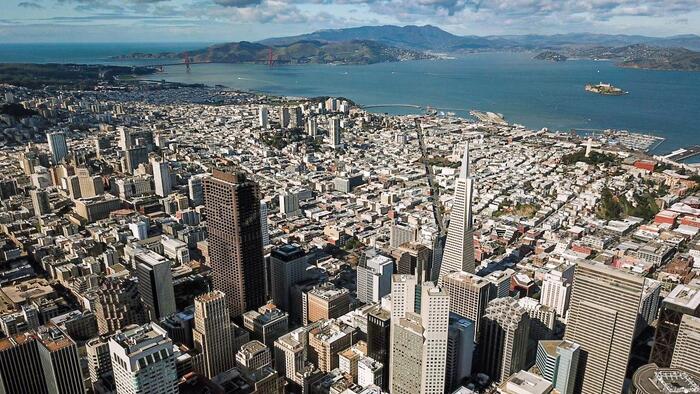
San Francisco, the global epicenter for AI talent and development, accounted for 25 percent of total national AI office demand in the second quarter, with the city's 81 active AI requirements averaging 62,000 square feet each -- 2.3 times the average technology requirement across all markets, according to VTS data cited in the report. The city's 5 million square feet of active AI requirements represents nearly a third of the national total.
Combined with Silicon Valley and New York, the three metro areas accounted for 63 percent of all current AI leasing activity, underscoring a geographic concentration that industry observers say mirrors previous technology cycles before expansion pressure forced companies into secondary markets.
San Francisco's office vacancy rate stood at 32.6 percent at the end of the first quarter, down from a pandemic-era peak of 35.7 percent in the second quarter of 2025 and well below the 30 percent level recorded in 2023. The city's office vacancy rate stood at 4.7 percent in the second quarter of 2019, before pandemic-driven remote work policies emptied downtown towers.
"San Francisco's 81 active AI requirements average 62,000 square feet, 2.3 times the average tech requirement across all markets," said Nick Romito, chief executive officer of VTS, in the report. The firm tracks commercial real estate leasing data across major U.S. markets.
The concentration reflects the distinct specialization emerging across the three primary hubs. San Francisco serves as headquarters for AI pioneers Anthropic, developer of the Claude model, and OpenAI, creator of ChatGPT. Silicon Valley's AI tenants skew toward chip designers, hardware manufacturers, and infrastructure providers. New York's 45 active AI requirements average 61,000 square feet each and skew toward enterprise-level AI firms serving the financial, legal, and media industries concentrated in the city. The 58 active searches in Silicon Valley average roughly 48,000 square feet, totaling approximately 2.8 million square feet of demand.
In Washington, D.C., AI firms including Anduril, Palantir, and Shield AI serve the defense industry, creating a fourth specialized node.
The concentration is already producing spillover effects. Seattle has experienced a 390 percent year-over-year increase in AI-related office demand, signaling that outward expansion is already underway. VTS identified Chicago, Los Angeles, Atlanta, and Austin, Texas, as primary markets likely to emerge as the next AI epicenters as the industry matures.
"Three pressures will push demand outward: AI engineering talent is scarce, San Francisco real estate is expensive, and 25 percent of active AI demand concentrated in a single submarket will produce the crowding that pushed prior cycles outward," the VTS report stated.
San Francisco office rents remain among the highest in the nation, though they have declined from pre-pandemic peaks. The average asking rent for Class A space in the city's Financial District and South of Market districts hovered around $68 per square foot in the first quarter, down from over $80 per square foot in 2019. Silicon Valley Class A rents averaged approximately $65 per square foot, while New York's Midtown South and Hudson Yards districts commanded rents above $85 per square foot for top-tier AI-ready space.
The AI leasing surge comes as traditional technology companies continue to shed space. Meta Platforms, Salesforce, and Uber have all sublet or surrendered significant blocks of space in San Francisco since 2022. Overall technology sector leasing volume in San Francisco remains well below 2019 peaks, but the AI segment has emerged as the sole bright spot in an otherwise moribund market.
VTS data shows that AI companies signed approximately 2.3 million square feet of new leases in San Francisco during the first half of 2025, exceeding the total for all of 2024. Notable transactions include OpenAI's expansion into an additional 400,000 square feet at Mission Rock, Anthropic's 250,000-square-foot lease at the former Salesforce Tower at Mission Bay, and a 180,000-square-foot commitment by a stealth-mode foundation model company in the Transbay district.
In New York, OpenAI signed a 90,000-square-foot expansion at Pencil Tower in Hudson Yards in March, while enterprise AI platform Cohere leased 65,000 square feet at One Vanderbilt in January. Silicon Valley saw significant commitments from semiconductor firms, including a 300,000-square-foot lease by a stealth AI chip startup in Santa Clara and a 220,000-square-foot expansion by a GPU cloud infrastructure provider in San Jose.
The AI office boom is also reshaping building specifications. Landlords are investing heavily in power density upgrades, liquid cooling infrastructure, and enhanced backup generation to meet the intensive computational requirements of AI workloads. Buildings capable of supporting 50 to 100 kilowatts per rack are commanding premiums of 30 to 50 percent over standard Class A space, according to brokers at CBRE and JLL.
"AI-ready buildings are becoming a distinct asset class," said Colin Yasukochi, executive director of CBRE's Tech Insights Center. "Landlords who can deliver 100 kilowatts per rack with liquid cooling and redundant power are essentially printing money right now. The retrofit costs are substantial, but the rent premiums justify the investment."CBRE estimates that less than 15 percent of existing Class A office inventory in San Francisco meets the power and cooling requirements for large-scale AI training clusters without significant capital expenditure.
The demand surge has also revived interest in development projects that were stalled during the pandemic. Tishman Speyer's Mission Rock development, Kilroy Realty's Flower Mart project, and Boston Properties' Mission Bay expansion have all seen renewed leasing momentum driven almost exclusively by AI tenants. Several projects that had been placed on hold in 2023 and 2024 have resumed construction.
Venture capital deployment into AI startups remains robust, providing a pipeline of future tenants. U.S. AI startups raised $47 billion in the first half of 2025, according to PitchBook data, surpassing the full-year 2024 total of $42 billion. The median Series A round for an AI infrastructure company now includes provisions for 30,000 to 50,000 square feet of office and data center space within 18 months of funding.
Not all market observers are convinced the boom is sustainable. "We've seen this movie before," said Ken McCarthy, principal economist at Cushman & Wakefield. "The dot-com boom concentrated in SOMA before spreading to the Peninsula. The social media boom did the same thing. The AI boom is following the exact same playbook. The question is whether the fundamentals support the long-term space requirements, or whether we're building for a hiring spike that normalizes."McCarthy noted that AI companies tend to require significantly more space per employee than traditional software firms due to hardware labs, GPU clusters, and data center adjacency requirements. The average AI employee occupies roughly 250 square feet of office and technical space combined, compared with 150 square feet for a traditional software engineer.
Vacancy in San Francisco's South of Market district, the epicenter of AI leasing, has fallen to 28.4 percent from 34.2 percent a year ago. In the Financial District, vacancy remains elevated at 36.8 percent, reflecting the district's older building stock and limited power infrastructure. The divergence has created a bifurcated market where AI-ready buildings in SoMa and Mission Bay are effectively fully leased, while older towers in the Financial District struggle to attract interest.
New York's AI leasing has been concentrated in Midtown South, Hudson Yards, and the World Trade Center district, where newer buildings offer the floor plates and power capacity required. Vacancy in Hudson Yards Class A space has fallen below 10 percent, a level not seen since 2019.
The expansion into secondary markets is already visible in leasing data. Chicago recorded 180,000 square feet of AI leasing in the first half of 2025, up from 15,000 square feet in the same period a year earlier. Austin saw 120,000 square feet of new AI requirements, driven by expansions from companies establishing secondary engineering hubs. Atlanta recorded 95,000 square feet, and Los Angeles logged 85,000 square feet.
Seattle's 390 percent year-over-year surge was driven largely by Amazon's expanded AI infrastructure team and a cluster of AI startups spun out of the University of Washington's Paul Allen School of Computer Science. The city's 42 active AI requirements average 38,000 square feet.
The geographic concentration carries risks. San Francisco's housing costs and quality-of-life concerns continue to drive talent migration to lower-cost markets. A survey of 1,200 AI engineers conducted by Levels.fyi in the first quarter found that 42 percent would prefer to work remotely or in a lower-cost hub, up from 35 percent a year earlier. Companies are responding by establishing distributed engineering hubs while keeping core research teams in San Francisco.
OpenAI now maintains significant engineering operations in Seattle, London, and Tokyo. Anthropic has expanded its London office to 200 employees and is actively searching for space in New York and Seattle. Google DeepMind operates major centers in London, Montreal, and Mountain View, in addition to its San Francisco presence.
The defense-focused AI cluster in the Washington, D.C., metro area represents a distinct growth vector. Anduril's 500,000-square-foot campus in Costa Mesa, California, and its expanding Arlington, Virginia, operations anchor a defense-tech ecosystem that includes Palantir's 300,000-square-foot Tysons Corner lease and Shield AI's 150,000-square-foot San Diego headquarters. The Department of Defense's increased AI procurement budget, which topped $12 billion in fiscal 2025, provides a stable demand base less sensitive to commercial cycles.
Office landlords in the primary AI markets are recalibrating capital allocation. SL Green Realty, Boston Properties, and Kilroy Realty have all announced increased capital expenditure budgets for 2025 and 2026, directed primarily at power and cooling upgrades. Kilroy Realty allocated $400 million for AI-ready retrofits across its San Francisco and San Diego portfolios. Boston Properties committed $350 million for similar upgrades in Boston, San Francisco, and New York.
The retrofit boom has created a bottleneck in specialized electrical and mechanical equipment. Lead times for 2-megawatt transformers have stretched to 18 months. Liquid cooling distribution units are on 12-month backorder. Contractors specializing in data center-grade buildouts are booked through 2026.
"The supply chain constraints are real," said Yasukochi. "Landlords who started retrofits in 2023 are delivering AI-ready space now. Those starting today won't deliver until late 2026 at the earliest. The window for capturing this demand cycle is narrowing."
Vacancy in San Francisco is projected to decline further through 2025 if current absorption trends continue. CBRE forecasts the city's overall office vacancy rate could dip below 30 percent by year-end, a psychological threshold not breached since the third quarter of 2020. The SoMa submarket could see vacancy fall below 20 percent.
However, the broader office market faces a maturity wall in 2026 and 2027, when a significant volume of leases signed in the 2015-2019 boom expire. Unless traditional tenants renew or new AI demand backfills the space, vacancy could resume its upward trajectory.
"The AI boom is real, but it's concentrated," McCarthy said. "It's not going to fill 30 million square feet of vacant office space in San Francisco by itself. It might fill 5 to 8 million over the next few years. That's meaningful, but it's not a full recovery."
For now, the cranes have returned to the San Francisco skyline. At Mission Rock, Mission Bay, and the Transbay district, construction activity has resumed on projects that sat idle for two years. The buyers of that space, overwhelmingly, are building the infrastructure of artificial intelligence.
"San Francisco is still the center of gravity for AI," said Romito. "The talent is here, the capital is here, the ecosystem is here. Companies will expand elsewhere because they have to, not because they want to. The gravity well is deep."
DECLASSIFIED SOURCE: Zero Hedge
Advertisement
No comments yet. Start the conversation.