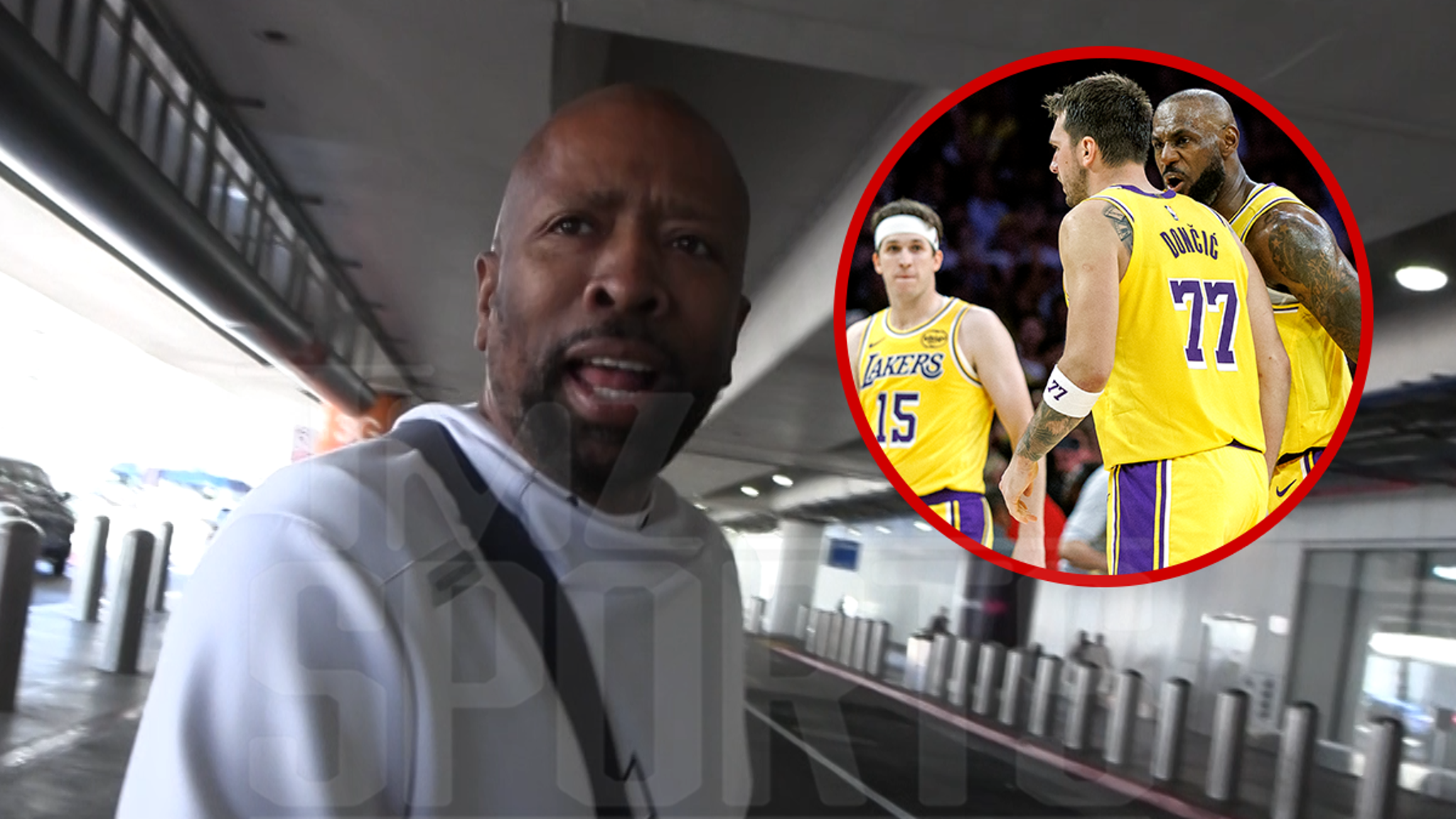
The Catalyst: An Analyst's Stark Assessment
The recent comments from NBA Hall of Famer and TNT analyst Kenny 'The Jet' Smith have sent ripples through the basketball world, particularly among fans and stakeholders of the Los Angeles Lakers. Speaking to TMZ Sports, Smith delivered a blunt assessment of the Lakers' prospects, stating unequivocally that the team's current roster, despite its offseason acquisitions, is not equipped to contend for a championship in the absence of superstar LeBron James. This declaration comes at a pivotal time for the Lakers, who have been navigating a complex transition period marked by uncertainty surrounding James's future and the team's strategic direction. Smith's remarks highlight a growing sentiment among some basketball pundits that the Lakers' reliance on James has created a structural vulnerability that new additions alone cannot easily rectify.
Smith's analysis is rooted in the fundamental impact a player of LeBron James's caliber has on a franchise. James, a four-time NBA MVP and four-time champion, has consistently elevated every team he has played for, not just through his scoring and playmaking, but also through his unparalleled leadership, basketball IQ, and ability to attract other top-tier talent. His potential departure, or even a significant decline in his performance, represents a void that few, if any, individual players or a collection of role players can fill. The offseason for the Lakers, while active, has reportedly focused on bolstering depth and acquiring complementary pieces, rather than securing another generational talent. This strategy, according to Smith, falls short of what is required to maintain championship aspirations in the highly competitive Western Conference.
The timing of Smith's statement is particularly salient given the ongoing discussions about the Lakers' long-term strategy. With James nearing the twilight of his illustrious career, the franchise faces the daunting task of rebuilding or retooling around a new core. The 'new additions' referenced by Smith are generally understood to be players acquired through free agency or trades designed to improve specific aspects of the team, such as shooting, defense, or bench production. However, these moves, while potentially improving overall team balance, do not address the fundamental issue of replacing a player who consistently ranks among the league's elite in multiple statistical categories and possesses an unmatched ability to perform in high-pressure situations. Smith's critique serves as a stark reminder that the path to championship contention is often paved by superstar talent, a commodity the Lakers may soon lack.
The immediate reaction to Smith's comments has been varied, with some fans expressing agreement, citing the historical difficulty of replacing a player of James's stature, while others have dismissed it as premature speculation, arguing that team chemistry and coaching could still lead to unexpected success. Nevertheless, Smith's voice carries significant weight within the NBA community. As a former player who won two championships with the Houston Rockets and a long-standing analyst for 'Inside the NBA,' his insights are often respected for their candor and deep understanding of the game. His assessment, therefore, is not merely casual commentary but a professional evaluation that underscores the immense challenge facing the Lakers as they prepare for a future potentially without their cornerstone.
Historical Context: The Lakers' Superstar Legacy
The Los Angeles Lakers franchise has a storied history built on the foundation of superstar talent. From George Mikan in the early days to Wilt Chamberlain, Jerry West, Kareem Abdul-Jabbar, Magic Johnson, Shaquille O'Neal, Kobe Bryant, and most recently, LeBron James, the team's success has almost invariably been tied to the presence of transcendent players. This historical pattern creates a significant precedent for evaluating the team's prospects without a dominant figure like James. The 'Showtime' Lakers of the 1980s, led by Magic Johnson and Kareem Abdul-Jabbar, exemplified an era of sustained excellence, securing five championships. Their eventual decline coincided with the retirement of these legends, illustrating the direct correlation between superstar presence and championship contention.
The early 2000s saw the Lakers dominate with the formidable duo of Shaquille O'Neal and Kobe Bryant, capturing three consecutive titles. The eventual breakup of this pairing, despite Bryant's continued individual brilliance, led to a period of rebuilding before he eventually won two more championships with a strong supporting cast. Even then, Bryant was undeniably the primary engine of those teams. This historical reliance on a singular or dual superstar model has ingrained a particular expectation within the Lakers' fan base and management: that the path to the NBA Finals runs directly through elite, top-tier talent. When LeBron James arrived in Los Angeles in 2018, he was seen as the latest iteration of this tradition, tasked with restoring the franchise to its former glory after several lean years.
LeBron James's tenure with the Lakers, while culminating in a championship in 2020, has also been marked by periods of injury and roster instability. His arrival immediately transformed the team into a playoff contender, demonstrating his profound individual impact. However, the team's performance in seasons where James was injured or where the supporting cast struggled highlighted the extent of their dependence on him. The 2020 championship run, notably, featured a strong supporting cast including Anthony Davis, but James was undeniably the primary orchestrator and closer. The subsequent seasons have seen the Lakers struggle with roster construction, age, and injuries, often failing to meet championship expectations despite James's continued individual excellence.
The current situation, where the team is contemplating a future without James, or at least without him at his absolute peak, forces a re-evaluation of the traditional Lakers' model. Historically, when a superstar departs or declines, the team typically enters a rebuilding phase, often enduring several seasons of mediocrity before another star emerges or is acquired. The challenge for Lakers management, led by General Manager Rob Pelinka and owner Jeanie Buss, is to either defy this historical trend by building a championship-caliber team through collective strength and strategic depth, or to find the next generational talent. Kenny Smith's comments underscore the difficulty of the former, suggesting that the 'new additions' are not sufficient to break from the historical pattern of superstar dependency for championship success.
The NBA landscape itself has evolved, with many successful teams built around multiple All-Stars rather than a single dominant figure. However, even these teams often feature a clear hierarchy with one or two players capable of consistently delivering MVP-level performances. The Lakers' historical blueprint, combined with the sheer magnitude of LeBron James's impact, makes any transition away from his leadership a monumental undertaking, one that few teams successfully navigate without a significant dip in competitive standing. Smith's assessment, therefore, is not just about the current roster, but about the inherent challenge of maintaining a championship standard when the historical engine of that standard is no longer present or fully operational.
Stakeholder Positions: Conflicting Visions for the Future
The various stakeholders involved with the Los Angeles Lakers hold distinct and often conflicting visions for the team's future, particularly in a post-LeBron James era. Kenny Smith, as an independent analyst, represents a segment of the media and former player community that prioritizes raw talent and proven championship formulas. His position is that without a player of James's caliber, the Lakers' current roster, regardless of its depth, simply lacks the firepower to compete for a title. This perspective is often shared by traditionalists who believe that championships are won by superstars, not by committee.
Lakers management, primarily General Manager Rob Pelinka and owner Jeanie Buss, faces immense pressure to maintain the franchise's competitive integrity and appeal. Their public statements often emphasize a commitment to winning and building a sustainable contender. However, their actions in the offseason, focusing on acquiring complementary players rather than another top-tier star, suggest a strategy of incremental improvement and roster balance. This approach might be driven by several factors: the scarcity of available superstar talent, salary cap limitations, or a belief that a more balanced team, even without a singular dominant force, can achieve success through collective effort and strategic coaching. They are incentivized to project confidence and stability, even if the underlying reality is a challenging transition.
LeBron James himself, while not directly commenting on Smith's remarks, has consistently expressed a desire to compete for championships. His career trajectory indicates a strong preference for being on a team with legitimate title aspirations. His future decisions, whether to remain with the Lakers, seek a trade, or retire, will profoundly impact the team's direction. His incentive is to maximize his remaining years in the league by playing for a contender, which may or may not align with the Lakers' current trajectory as perceived by analysts like Smith. His influence extends beyond the court, impacting free agent decisions and the overall perception of the franchise.
The current Lakers players, particularly those who have played alongside James, are incentivized to believe in their collective ability and the team's potential. Publicly, they will likely express confidence in the roster and their ability to compete, regardless of external commentary. However, privately, the absence of a player who can consistently create opportunities and elevate performance could lead to increased pressure and a shift in offensive and defensive responsibilities. Their careers and market value are directly tied to the team's success, creating a strong incentive to perform and prove doubters wrong.
NBA media and fans represent a broad spectrum of opinions. Media outlets, including TMZ, are incentivized to generate engagement through compelling narratives and strong opinions. Smith's comments provide exactly that. Fans, on the other hand, are driven by loyalty and the desire for their team to win. Some will align with Smith's pessimistic view, while others will remain optimistic, hoping for a surprise season. The collective sentiment of the fanbase can influence ticket sales, merchandise revenue, and overall team morale, making it a critical, albeit less direct, stakeholder position. The challenge for the Lakers is to navigate these diverse expectations while attempting to build a competitive team in a post-superstar landscape.
Mechanics & Evidence: Deconstructing the 'Gap' Without LeBron
Kenny Smith's assertion that the Lakers' 'new additions will not fill the gap LeBron James is leaving behind' is a direct commentary on the mechanics of team building and the irreplaceable qualities of a generational superstar. The 'gap' James leaves is multifaceted, extending beyond mere statistical output. While the source data does not specify the exact 'new additions' the Lakers made this offseason, general NBA team-building principles suggest these are typically players acquired to address specific roster deficiencies, such as three-point shooting, perimeter defense, or interior presence. However, these additions, by their nature, are usually complementary pieces rather than primary offensive or defensive engines.
LeBron James's impact is quantifiable in several key areas. Offensively, he is an elite scorer, averaging over 25 points per game for most of his career, and an exceptional playmaker, consistently ranking among the league leaders in assists. His ability to initiate offense, create shots for himself and others, and control the pace of the game is virtually unmatched. Replacing this level of offensive creation requires not just one player, but often a combination of a primary ball-handler, a high-volume scorer, and multiple secondary playmakers. The 'new additions' are unlikely to collectively provide this level of offensive gravity and efficiency, leading to a significant drop in offensive rating and overall scoring potential.
Defensively, while James is not always a lockdown defender, his size, strength, and basketball IQ allow him to guard multiple positions and make crucial plays in critical moments. More importantly, his leadership and communication on the defensive end are vital for team cohesion. Without his commanding presence, the Lakers' defense could suffer from a lack of direction and accountability. The 'new additions' might bring individual defensive prowess, but replicating James's overall defensive impact, particularly his ability to organize and motivate, is a far greater challenge.
Beyond statistics, James brings an intangible leadership quality that is difficult to quantify but profoundly impacts team success. He is a vocal leader, a mentor to younger players, and a calming presence in high-pressure situations. His championship pedigree and experience instill confidence in his teammates and often intimidate opponents. This 'championship DNA' is not something that can be acquired through typical offseason transactions. It is a rare commodity that only a handful of players in NBA history possess. Smith's use of the phrase 'fill the gap' directly addresses this holistic impact, suggesting that the Lakers' current strategy of acquiring role players, while potentially improving overall depth, fails to address the void left by James's unique combination of skills, leadership, and experience.
The evidence supporting Smith's claim is largely historical and observational. Teams that lose a player of James's caliber rarely maintain their championship contention status without immediately acquiring another top-five player. The Cleveland Cavaliers, for instance, experienced significant drops in performance after James's departures in both 2010 and 2014. While the Lakers have other talented players, such as Anthony Davis, the burden of primary creation and leadership would fall squarely on his shoulders, a role he has not consistently held as the sole superstar. Smith's analysis, therefore, is not merely an opinion but an informed assessment based on the historical impact of superstar departures and the inherent limitations of building a championship team solely through complementary pieces.
What Happens Next: Scenarios for the Lakers' Future
The Los Angeles Lakers face several critical scenarios in the immediate and near-term future, all heavily influenced by the potential absence or diminished role of LeBron James. Kenny Smith's comments set a low bar for expectations, suggesting that the team is not currently built for championship contention. The most immediate consequence will be a significant shift in team identity and offensive strategy. For years, the Lakers' offense has largely flowed through James, leveraging his playmaking and scoring. Without him, or with a less dominant version of him, other players, most notably Anthony Davis, will be forced to take on expanded roles as primary initiators and scorers. This transition will test the coaching staff's ability to implement new schemes and the players' capacity to adapt.
In the short term (next 2-5 days), expect increased media scrutiny and commentary regarding the Lakers' roster construction and future plans. Other analysts will likely weigh in, either corroborating Smith's view or offering counter-arguments about the potential of the 'new additions' and the existing talent. Lakers management may issue a statement or a player may offer a public response, aiming to project confidence and unity. However, these will largely be narrative-driven attempts to manage public perception rather than substantive changes to the team's competitive outlook.
Over the next 3-6 months, leading up to and through the initial phase of the upcoming NBA season, the Lakers' on-court performance will be the ultimate arbiter. If the team struggles significantly, particularly in close games where James's clutch playmaking was once decisive, it will validate Smith's assessment. A poor start could trigger further roster moves, potentially involving trades to acquire another star or to shed contracts in preparation for future free agency classes. Conversely, if the 'new additions' integrate seamlessly and players like Davis elevate their game, the narrative could shift, though sustained championship contention would still be a high bar.
Looking further ahead, over the next 12-24 months, the Lakers' long-term strategy will become clearer. If James departs or retires, the franchise will be at a crossroads. They could commit to a full rebuild, prioritizing draft picks and young talent, a path that historically takes several years to yield results. Alternatively, they could aggressively pursue another superstar in free agency or via trade, leveraging the Lakers' market appeal and historical prestige. However, the availability of such talent is never guaranteed, and the competition for it is fierce. The success of this strategy hinges on the ability of Pelinka and Buss to attract and secure a new cornerstone player.
The financial implications for the Lakers could also be significant. A sustained period of non-contention could impact ticket sales, merchandise revenue, and broadcast ratings, although the Lakers' brand is robust enough to withstand some downturn. The value of the franchise, while substantial, is ultimately tied to its on-court success and star power. Kenny Smith's comments, while focused on basketball, implicitly touch upon these broader strategic and financial challenges facing one of the NBA's most iconic franchises as it grapples with a future potentially without its most recent superstar.
The Bottom Line: A New Era of Uncertainty for the Lakers
Kenny 'The Jet' Smith's direct assessment that the Los Angeles Lakers are no longer title contenders without LeBron James underscores a fundamental truth about modern NBA team building: the paramount importance of superstar talent. His comments, while blunt, reflect a widely held belief among basketball analysts and fans that a team's championship aspirations are inextricably linked to the presence of one or more top-tier, game-changing players. The Lakers' offseason moves, focused on depth and complementary pieces, are viewed by Smith as insufficient to bridge the immense 'gap' left by James's potential departure or decline, a gap that encompasses not just scoring and playmaking, but also leadership, experience, and an intangible winning mentality.
The historical context of the Lakers further amplifies Smith's point. This is a franchise built on the backs of legends, from Magic Johnson to Kobe Bryant, each of whom carried the team to multiple championships. The expectation in Los Angeles is not merely to make the playoffs, but to contend for the Larry O'Brien trophy. Without a player of James's unique capabilities, the Lakers are forced to redefine their identity and competitive strategy. This transition period is fraught with uncertainty, as the team attempts to balance the need for immediate competitiveness with the long-term goal of sustainable success.
For readers, the key takeaway is that the Lakers are entering a new, challenging era. The days of guaranteed contention simply by having LeBron James on the roster are likely over. While Anthony Davis remains a formidable talent, the burden of carrying a franchise to a championship is immense, and the current roster, as assessed by Smith, lacks the collective firepower to consistently overcome the league's elite teams. The 'new additions' may improve the team's overall balance and depth, but they do not replace the singular impact of a player who has been the face of the league for two decades.
The implications extend beyond just the Lakers. This situation highlights the broader trend in the NBA where superstar movement and team construction around elite talent dictate the championship landscape. Teams that successfully navigate the post-superstar transition often do so by either immediately acquiring another top-tier player or committing to a multi-year rebuild. The Lakers' current path appears to be a hybrid, attempting to remain competitive while also preparing for a future without their most recent icon. Smith's comments serve as a reality check, suggesting that this hybrid approach may not be enough to satisfy the franchise's championship ambitions.
Ultimately, the Lakers' future will be a test case for how a storied franchise adapts to the inevitable decline or departure of a generational talent. While optimism from within the organization is expected, external, evidence-based assessments like Kenny Smith's provide a more grounded perspective. The path to championship contention is arduous, and without the unparalleled impact of LeBron James, the Lakers, according to 'The Jet,' have a significant climb ahead of them.
DECLASSIFIED SOURCE: TMZ
No comments yet. Start the conversation.