The Catalyst: Federal Pressure on Voter Integrity
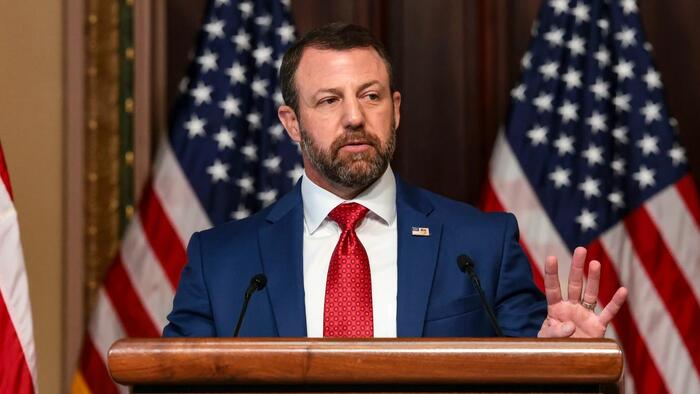
On Friday, July 18, 2026, Department of Homeland Security (DHS) Secretary Markwayne Mullin issued a significant warning, stating that states failing to purge their voter rolls of potentially ineligible voters and noncitizens could face a loss of federal funding. This announcement came as Secretary Mullin revealed that the DHS had identified over 250,000 noncitizens allegedly registered on voter rolls across four key states: California, New Jersey, Pennsylvania, and Nevada. Mullin emphasized the necessity of these actions, asserting, "If these states want a grant, and they want to be reimbursed to run federal elections, they're going to have to implement security measures." He further stressed that voting systems must be secured and voter registration lists meticulously "scrubbed" to ensure that "individuals that are legally able to vote are voting."
Secretary Mullin's remarks closely followed a speech delivered by former President Donald Trump on July 16, 2026. In his address, President Trump detailed what he described as significant irregularities and flaws in the 2020 election, specifically highlighting issues with voter rolls in various states. Trump explicitly called for the passage of a voter identification bill, which currently remains stalled in Congress. He stated, "I've also ordered DHS to notify every state about non-citizens on their voter rolls and direct them to remove all ineligible voters from the lists immediately." Trump underscored the urgency of the situation by adding, "But most importantly, addressing this crisis of election security demands that Congress must pass the SAVE America Act." This legislative push, coupled with the DHS warning, signals a concerted federal effort to enforce stricter voter registration and identification protocols, framing election security as a matter of national security, a sentiment echoed by Mullin who quoted Trump: "President Trump is correct when he said that election security is national security... this is just exposing what took place and to make sure it never happens again." The White House concurrently released sections of documents related to alleged vulnerabilities in U.S. voting systems, claims of China acquiring and exploiting U.S. voter data, findings from a Michigan voter-registration investigation, and detailed information regarding noncitizens on state voter rolls, further amplifying the administration's focus on these issues.
Historical Context: A Decades-Long Battle Over Election Security
The debate over voter roll integrity and election security is not new; it has been a contentious issue in American politics for decades, intensifying significantly in recent election cycles. Concerns about the accuracy of voter registration lists, the potential for voter fraud, and the security of voting systems have been raised by various groups across the political spectrum, though the specific focus and proposed solutions often differ. Historically, arguments for stricter voter ID laws and regular voter roll purges have been championed by Republicans, who contend these measures are essential to prevent fraud and maintain the integrity of the electoral process. Democrats, conversely, have often expressed concerns that such measures could disenfranchise eligible voters, particularly minority groups, the elderly, and low-income individuals who may face challenges in obtaining required identification or navigating complex registration processes.
The 2020 presidential election served as a major flashpoint, with widespread allegations of irregularities and fraud, particularly from former President Donald Trump and his allies. These claims, though largely unsubstantiated by courts and election officials, fueled a persistent narrative among a significant portion of the electorate that U.S. elections are vulnerable to manipulation. Specific concerns raised included the presence of deceased individuals and noncitizens on voter rolls, as well as vulnerabilities in electronic voting systems and potential foreign interference. Secretary Mullin's reference to Iran hacking state voter files and attempts to compromise systems where military members vote, along with President Trump's assertion that the Chinese Communist Party (CCP) and other foreign adversaries meddled in the 2020 election, underscore the perceived national security dimension of these issues. The "Safeguard American Voter Eligibility Act," or SAVE America Act, is the latest legislative attempt to address these concerns at a federal level. Its provisions, mandating documentary proof of U.S. citizenship to register and valid photo identification to cast ballots in federal elections, represent a significant federalization of election requirements, a move that has historically faced strong opposition due to states' traditional authority over election administration. The current legislative battle reflects a long-standing ideological divide over the balance between access to the ballot and election security.
Stakeholder Positions: Federal Mandates Meet State Autonomy
The Department of Homeland Security, under Secretary Markwayne Mullin, is asserting a strong federal role in election security, framing it as a national security imperative. Mullin's directive to states to purge voter rolls and implement "security enhancements" is backed by the threat of withholding federal election funding, indicating a shift towards more aggressive federal oversight. The DHS position, as articulated by Mullin, is that ensuring only eligible citizens vote is a non-partisan issue, stating, "We need to make sure that individuals that are legally able to vote are voting," and that DHS has a mandate to "keep our voters safe and our elections safe." This stance aligns directly with former President Donald Trump's long-standing focus on election integrity, particularly since the 2020 election. Trump's recent speech on July 16, 2026, reiterated his call for stringent voter ID laws and the immediate removal of noncitizens from voter rolls, culminating in his endorsement of the SAVE America Act.
The Republican Party, generally, supports these federal initiatives. The SAVE America Act, which passed the House, reflects a broad Republican consensus on the need for stricter voter identification and citizenship verification. However, the path forward is not without internal challenges. Senate Majority Leader John Thune (R-S.D.) has publicly stated that his party lacks the votes to overcome a legislative filibuster to pass the SAVE America Act in the Senate, despite calls from the Trump administration to remove the filibuster for this purpose. This highlights a pragmatic hurdle within the Republican-controlled Senate, where procedural rules can impede even broadly supported party legislation. On the other side, while not explicitly detailed in the provided sources, the historical positions of the Democratic Party and many civil rights organizations suggest strong opposition to measures like the SAVE America Act. They typically argue that such requirements disproportionately affect marginalized communities and could suppress legitimate voter turnout, viewing them as barriers to democratic participation rather than security enhancements. The Breitbart article, while focused on North Carolina, provides insight into Republican messaging strategies, with Michael Whatley, a Republican Senate candidate, observing a trend of voters moving away from Democrats towards unaffiliated status, attributing it to the Democratic Party having "gotten crazier and crazier and crazy." Whatley's campaign strategy, focusing on "common sense" issues like parental rights and crime, suggests how Republicans intend to appeal to these unaffiliated voters, potentially leveraging election integrity concerns as part of a broader platform.
Mechanics & Evidence: The Basis for Federal Intervention
The core of the DHS's recent action rests on its alleged identification of over 250,000 noncitizens on voter registration rolls. Secretary Mullin specifically named California, New Jersey, Pennsylvania, and Nevada as the four states where these discrepancies were found. While the precise methodology for this identification was not detailed in the provided information, the implication is that DHS has conducted an analysis of voter registration data against other federal databases, such as those maintained by immigration authorities, to cross-reference citizenship status. This type of data matching has been a subject of debate, with critics often questioning the accuracy and potential for false positives when comparing disparate databases.
The proposed "security enhancements" that states would be required to implement to retain federal funding are broadly described as securing voting systems and "scrubbing" voter registration lists. This likely entails more frequent and rigorous processes for removing deceased voters, individuals who have moved out of state, and, critically, noncitizens. The White House's concurrent release of documents on Thursday, July 17, 2026, further supports the administration's claims. These documents reportedly include sections related to alleged vulnerabilities in U.S. voting systems, evidence of China having acquired and exploited U.S. voter data, the results of a Michigan voter-registration investigation, and additional details on noncitizens found on state voter rolls. These releases are intended to provide an evidentiary basis for the federal government's concerns and justify the proposed interventions.
Central to the legislative aspect of this initiative is the Safeguard American Voter Eligibility (SAVE America) Act. This bill, which has passed the House of Representatives, aims to establish federal mandates for voter registration and ballot casting. Specifically, it would require voters to provide documentary proof of U.S. citizenship when registering to vote and present valid photo identification at the polls for federal elections. These provisions represent a significant departure from the current system, where states largely determine their own voter registration and identification requirements. The act's passage in the House indicates a strong desire within one chamber of Congress to standardize and tighten election security measures nationwide, reflecting the administration's view that election security is a national security issue that transcends state-level discretion. The push to remove the legislative filibuster in the Senate to pass this bill underscores the perceived urgency and the political will behind these efforts, despite the acknowledged lack of sufficient votes by Senate Majority Leader Thune.
What Happens Next: Legislative Battles and State Responses
The immediate aftermath of Secretary Mullin's warning will likely involve a period of intense scrutiny and potential confrontation between the DHS and the identified states. California, New Jersey, Pennsylvania, and Nevada, all states with significant Democratic political influence, may resist federal mandates that they perceive as overreaching or designed to suppress voter turnout. States could challenge the DHS's authority to withhold federal election funding based on these criteria, potentially leading to legal battles. The specific mechanisms for withholding funds and the legal precedents for such actions will be closely examined. States might also demand more detailed evidence and transparency regarding the DHS's methodology for identifying noncitizens on voter rolls, potentially initiating their own audits or investigations to verify the claims.
On the legislative front, the fate of the SAVE America Act remains precarious in the Senate. Despite passing the House and receiving strong endorsement from former President Trump, Senate Majority Leader John Thune's admission that Republicans lack the votes to overcome a filibuster suggests a difficult path forward. The Trump administration's call to remove the legislative filibuster for this bill indicates the high priority placed on it, but such a move would be a significant procedural shift with broad implications for future legislation and is unlikely to garner bipartisan support. Therefore, the bill may remain stalled, forcing the administration to rely on executive actions and funding leverage through DHS to implement its election security agenda. The upcoming 2026 midterm elections will undoubtedly be influenced by this ongoing debate. Election integrity will likely remain a central campaign theme for Republican candidates, who will use the DHS findings and the stalled SAVE America Act to galvanize their base and appeal to voters concerned about election security. The Breitbart report on North Carolina voter trends, indicating a shift away from Democrats towards unaffiliated status, suggests that election-related messaging, particularly on "common sense" issues, could be effective in swaying independent voters. The actions taken by states in response to the DHS warning, or lack thereof, will also become a significant talking point in these campaigns, shaping the political landscape leading into the next federal election cycle.
The Bottom Line: A Deepening Divide Over Election Administration
The Department of Homeland Security's warning to states regarding voter roll purges and the threat of withholding federal funding marks a significant escalation in the federal government's efforts to assert control over election administration. This move, strongly backed by former President Donald Trump, underscores a persistent and deepening ideological divide over the balance between ensuring election security and protecting voter access. The identification of 250,000 noncitizens on voter rolls across four states—California, New Jersey, Pennsylvania, and Nevada—provides the immediate evidentiary basis for the DHS's intervention, though the specifics of this data and its verification will undoubtedly be subject to intense scrutiny and potential legal challenges from the affected states.
The legislative push for the SAVE America Act, which mandates federal standards for voter identification and citizenship verification, highlights the Republican Party's commitment to these reforms. However, the bill's stalled status in the Senate, due to the inability to overcome a legislative filibuster, reveals the formidable procedural and political obstacles to enacting such sweeping federal changes. Consequently, the administration may increasingly rely on executive actions and the leverage of federal funding through agencies like DHS to implement its election security agenda. This approach is likely to provoke resistance from states that view these actions as an infringement on their traditional authority over elections, potentially leading to protracted legal and political battles. The broader implications extend to the integrity of future elections, the trust placed in electoral processes, and the ongoing national debate about who is eligible to vote and how that eligibility is verified. The issue is framed by proponents as a national security imperative, citing foreign interference attempts, while opponents view it as a politically motivated effort to suppress votes. This fundamental disagreement ensures that election security will remain a highly contentious and defining issue in American politics for the foreseeable future, impacting voter behavior, legislative priorities, and the very structure of democratic participation.
DECLASSIFIED SOURCE: Zero Hedge
No comments yet. Start the conversation.