The Catalyst: A Rural Plant's Post-Pandemic Staffing Crisis
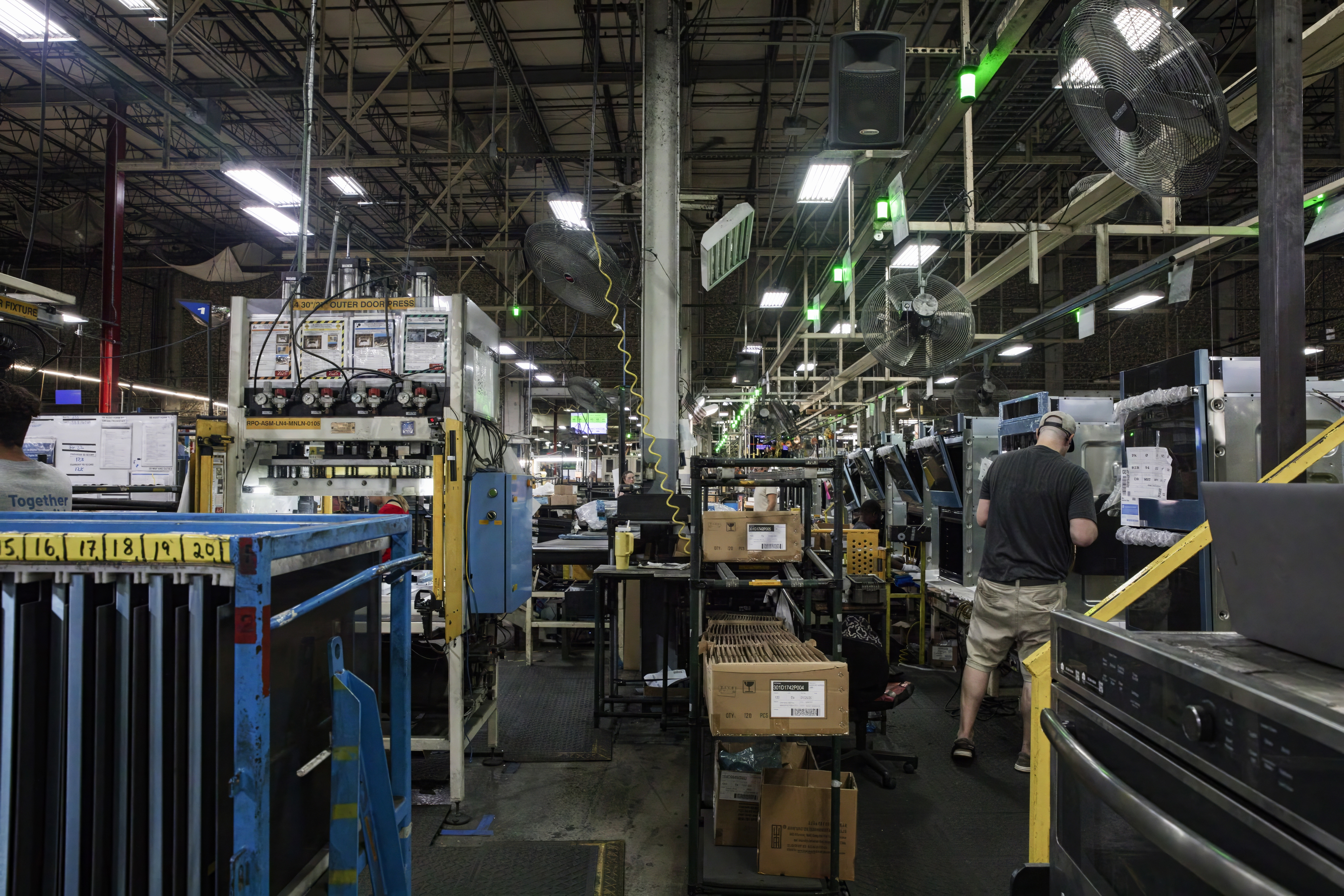
The GE Appliances manufacturing facility, strategically located in rural northwest Georgia, found itself grappling with a severe and persistent worker shortage in the period 'amid COVID-19'. This challenge was not unique to the plant but represented a microcosm of broader labor market disruptions that swept across the United States, particularly impacting industrial sectors and rural economies. The pandemic, which began in early 2020, triggered unprecedented shifts in workforce dynamics, including widespread illness, childcare challenges, and a reevaluation of work-life priorities among employees. For a large-scale manufacturing operation like GE Appliances, a deficit of 'hundreds of workers' translated directly into significant operational bottlenecks, reduced production capacity, and increased pressure on existing staff. The rural setting of the plant further compounded these issues, as such areas often face inherent difficulties in attracting and retaining a robust labor pool compared to more densely populated urban or suburban centers. Historically, rural manufacturing plants have relied on a stable, local workforce, but the pandemic's ripple effects disrupted even these established patterns, forcing companies to innovate or face sustained operational 'pain'.
The immediate consequence of this severe understaffing was a critical threat to the plant's ability to meet production targets for appliances, a sector that paradoxically saw increased demand during the pandemic as consumers invested more in their homes. This created a dual pressure point: high demand coupled with constrained supply due to labor scarcity. The traditional hiring methods and fixed-schedule work models, which had long been the bedrock of manufacturing operations, proved insufficient to overcome the new realities of the labor market. Companies across various industries reported difficulties in filling vacancies, with many job seekers prioritizing flexibility, better wages, and improved working conditions. The GE Appliances plant's situation in rural northwest Georgia underscored the urgent need for adaptive strategies to maintain operational viability and competitiveness in a rapidly evolving economic landscape. The introduction of a 'flexible work option' was not merely an incremental adjustment but a strategic imperative designed to directly counter the acute labor deficit and 'ease the pain' of understaffing that threatened the plant's productivity and long-term stability.
Historical Context: Labor Dynamics and Manufacturing in Rural America
The labor challenges faced by the GE Appliances plant in rural northwest Georgia are deeply rooted in decades of evolving economic and social trends impacting American manufacturing and rural communities. Historically, manufacturing was a cornerstone of rural economies, providing stable, often unionized, employment that sustained families and local businesses. However, starting in the late 20th century and accelerating into the 21st, the sector underwent significant transformations. Automation, globalization, and shifts in consumer demand led to widespread plant closures and job losses, particularly in regions heavily reliant on single industries. This resulted in a gradual hollowing out of the manufacturing workforce and a decline in the appeal of factory jobs for younger generations, who often sought opportunities in service industries or urban centers.
The 'amid COVID-19' period, specifically from early 2020 through 2022, acted as an accelerant to these pre-existing trends, creating what many economists termed a 'Great Reassessment' or 'Great Resignation.' Millions of workers voluntarily left their jobs, driven by health concerns, a desire for greater autonomy, and a re-evaluation of career paths. Manufacturing, with its often rigid schedules, physically demanding tasks, and sometimes lower wages compared to other sectors, struggled to compete. Rural areas, already contending with aging populations, limited public transportation, and fewer educational opportunities, found it even harder to attract and retain workers. The GE Appliances plant's struggle to fill 'hundreds of workers' was a direct consequence of these converging historical forces, exacerbated by the immediate shock of the pandemic. The traditional model of a 9-to-5, five-day-a-week factory job no longer resonated with a significant portion of the available workforce, necessitating a fundamental rethinking of how industrial labor could be organized and incentivized to meet modern demands.
Furthermore, the specific geographic context of 'rural northwest Georgia' highlights regional disparities in labor market resilience. While some metropolitan areas rebounded quickly, rural regions often experience slower economic recovery and persistent challenges in workforce development. The reliance on a local talent pool, which may have dwindled over time due to out-migration or a lack of new entrants into manufacturing trades, meant that the plant's options for traditional recruitment were severely limited. This historical backdrop underscores why a novel approach, such as the 'flexible work option' utilizing an 'app' for shift management, became not just an attractive alternative but a critical survival strategy for maintaining operational capacity and ensuring the plant's continued contribution to the local economy and the broader supply chain for GE Appliances.
Stakeholder Positions: Adapting to New Labor Realities
The implementation of a flexible work model at the GE Appliances plant in rural northwest Georgia reflects a complex interplay of interests among various stakeholders, each seeking to optimize outcomes in a challenging labor environment. From the perspective of GE Appliances management, the primary objective was to restore and stabilize the plant's workforce to ensure consistent production and meet consumer demand. The severe shortage of 'hundreds of workers' directly impacted profitability and market share, making the adoption of innovative staffing solutions a strategic imperative. Management's position was driven by the need for operational efficiency, cost control, and the long-term viability of the facility. The 'flexible work option' was likely viewed as a pragmatic response to a market failure in traditional recruitment, aiming to tap into previously inaccessible labor pools and reduce the significant costs associated with understaffing, such as overtime for existing employees and delayed production schedules.
For the workers, both existing and potential, the shift to an 'app-based' flexible schedule offered significant advantages. The 'amid COVID-19' period highlighted a widespread desire for greater autonomy and work-life balance. Many workers, particularly those with childcare responsibilities, elder care duties, or pursuing education, found rigid 40-hour work weeks incompatible with their personal lives. The ability to 'sign up for shifts through an app' provides unprecedented control over one's schedule, allowing individuals to tailor their work hours to their personal needs. This empowerment can lead to increased job satisfaction, reduced stress, and improved retention rates, directly addressing some of the root causes of the post-pandemic labor exodus. For those in rural northwest Georgia, where alternative employment opportunities offering such flexibility might be scarce, this model could make a manufacturing job at GE Appliances significantly more attractive.
The local community in rural northwest Georgia also holds a critical stake in the plant's success. A thriving GE Appliances plant means stable employment, local tax revenue, and indirect economic benefits for supporting businesses. A severe worker shortage, conversely, threatens these benefits, potentially leading to reduced economic activity and community decline. The flexible work model, by stabilizing the workforce, helps ensure the plant's continued operation and its role as a major employer in the region. Furthermore, industry analysts and labor economists view such initiatives as crucial experiments in adapting traditional industries to modern workforce expectations. Their position often emphasizes the need for manufacturing to shed its outdated image and embrace technology-driven solutions to remain competitive and attract a new generation of workers. The success of GE Appliances in 'easing the pain' through this model provides valuable data for broader industry adoption, signaling a potential paradigm shift in how industrial labor is managed and valued across the sector.
Mechanics & Evidence: The App-Based Flexible Shift System
The core mechanism that 'eased the pain' of the worker shortage at the GE Appliances plant in rural northwest Georgia was the implementation of a 'flexible work option' where some workers could 'sign up for shifts through an app'. While the source provides limited granular detail on the specific technology or operational protocols, the concept implies a sophisticated workforce management system. At its heart, such a system typically involves a digital platform, accessible via a smartphone application, that allows employees to view available shifts, claim shifts that fit their personal schedules, and potentially trade shifts with colleagues. This contrasts sharply with traditional manufacturing scheduling, which often relies on fixed shifts, seniority-based assignments, or manual scheduling processes that offer little to no worker autonomy.
The evidence, as stated by NPR Topics: News, is that this system 'has eased the pain' of the worker shortage. This suggests a measurable positive impact on staffing levels, absenteeism, or overall operational efficiency. While specific metrics such as reduction in vacancy rates, improvement in production output, or enhanced employee retention are not provided in the source, the phrase 'eased the pain' strongly implies that the plant is now better able to staff its production lines and maintain a more consistent operational tempo than during the peak of the 'amid COVID-19' labor crisis. The success hinges on several key mechanical components: a robust app interface that is intuitive for workers, a backend system that manages labor demand and supply in real-time, and clear communication protocols for shift availability and changes. This digital infrastructure allows the plant to dynamically adjust its workforce to production needs while simultaneously offering workers the flexibility they increasingly demand.
The shift to an app-based system also represents a significant technological upgrade for a traditional manufacturing environment. It leverages the widespread adoption of smartphones and digital literacy among the modern workforce. For the GE Appliances plant, this means moving beyond static schedules to a dynamic model where labor can be allocated more efficiently. For instance, if a particular production line experiences an unexpected surge in demand or a sudden absence, management can quickly post additional shifts on the app, allowing available workers to pick them up. This agility is a critical advantage in mitigating the unpredictable nature of labor availability that characterized the 'amid COVID-19' period. The evidence, though concise, points to a successful adaptation of modern digital tools to solve a pressing, real-world industrial challenge, demonstrating that even established manufacturing giants like GE Appliances can innovate their human resources strategies to remain competitive and operationally sound in a volatile labor market.
What Happens Next: Scaling Flexibility in Manufacturing
The successful implementation of an app-based flexible work model at the GE Appliances plant in rural northwest Georgia sets a precedent that could significantly influence the future of labor management in the broader manufacturing sector. What happens next will likely involve a two-pronged approach: internal expansion within GE Appliances and external adoption by other industrial companies. Internally, GE Appliances, a subsidiary of Haier, will likely evaluate the specific metrics of success – such as improved retention rates, reduced absenteeism, and increased production efficiency – at this Georgia plant. If these metrics are compelling, it is highly probable that the company will explore replicating this 'flexible work option' across its other manufacturing facilities, particularly those facing similar labor shortages or located in challenging recruitment environments. This internal scaling would require significant investment in technology, training, and a cultural shift within management to embrace dynamic scheduling over traditional fixed models.
Externally, the manufacturing industry, which has been grappling with persistent labor shortages and an aging workforce, will be closely observing the long-term outcomes at the GE Appliances plant. Competitors and other industrial giants, particularly in sectors like automotive, heavy machinery, and other consumer goods, may initiate pilot programs or adopt similar app-based flexible scheduling systems. The appeal lies in the potential to tap into new demographics of workers, including part-time employees, students, or individuals seeking supplemental income, who might otherwise be excluded by rigid full-time schedules. However, challenges to widespread adoption exist, including the capital investment required for new software and infrastructure, potential resistance from existing union contracts that often stipulate fixed work arrangements, and the need for robust IT support to manage complex dynamic scheduling systems across multiple sites.
Furthermore, the success of this model could influence policy discussions around workforce development and labor regulations. Governments and industry associations might promote flexible work as a strategy to boost domestic manufacturing employment and enhance economic resilience in rural areas. The next 12-24 months will be crucial in determining the scalability and long-term sustainability of such models. If the GE Appliances plant continues to report positive results, it could catalyze a broader transformation in how manufacturing views and manages its human capital, moving towards more agile and worker-centric approaches. Conversely, if unforeseen operational complexities or worker dissatisfaction emerge, it could temper enthusiasm for rapid adoption. The initial 'easing of pain' is a promising start, but the true test will be its enduring impact and its ability to inspire similar innovations across a traditionally conservative industrial landscape.
The Bottom Line: A Blueprint for Industrial Workforce Adaptation
The experience of the GE Appliances plant in rural northwest Georgia offers a compelling bottom line: the traditional manufacturing sector can effectively adapt to modern labor market demands by embracing technological solutions and offering greater worker flexibility. The severe worker shortage 'amid COVID-19' was not merely a temporary disruption but a stark revelation of underlying shifts in workforce expectations, particularly the desire for autonomy and work-life balance. By implementing a 'flexible work option' that allows workers to 'sign up for shifts through an app,' GE Appliances has demonstrated a viable blueprint for addressing these challenges head-on. This approach moves beyond conventional recruitment tactics, directly tackling the structural issues that make industrial jobs less attractive to a significant portion of the contemporary labor pool.
The core takeaway for businesses, particularly those in manufacturing and other sectors facing similar labor constraints, is that innovation in human resources strategy is as critical as innovation in product development or production processes. The success in 'easing the pain' at the Georgia plant underscores that investing in worker-centric scheduling technologies can yield tangible operational benefits, including improved staffing levels and potentially enhanced productivity. This is not just about filling vacancies; it's about creating a more resilient, adaptable, and attractive work environment that can compete for talent in a dynamic economy. For rural communities, this model offers a pathway to sustain and grow local employment, ensuring that manufacturing plants remain vital economic anchors even as demographic and social trends evolve.
Ultimately, the GE Appliances case highlights a broader truth: the future of work in industrial settings will increasingly be defined by flexibility, technology integration, and a deeper understanding of employee needs. Companies that cling to outdated, rigid work models risk being left behind in the competition for skilled labor. While the specific details of the app and its full impact remain to be publicly quantified, the reported success in rural northwest Georgia serves as a powerful proof of concept. It signals a necessary evolution for manufacturing, demonstrating that by empowering workers with greater control over their schedules, companies can transform a significant operational challenge into a strategic advantage, securing their workforce and their future in an ever-changing global economy.
DECLASSIFIED SOURCE: NPR News
No comments yet. Start the conversation.