The Catalyst
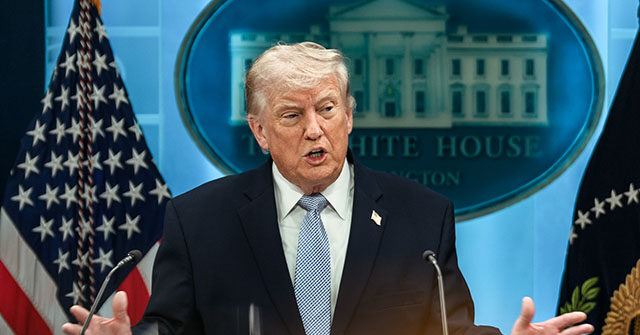
During an appearance on the Hugh Hewitt Show on Monday, July 13, 2026, former President Donald Trump stated that any future nuclear agreement with Iran must be preceded by International Atomic Energy Agency (IAEA) inspector access to the facility known as Pickaxe Mountain — a reference to the Fordow Fuel Enrichment Plant buried beneath a mountain near Qom. According to Breitbart News, Trump asserted that Iran's regime "breaks deals" and characterized the Iranian approach as: "They make deals, and, to them, deals are made to" — the quote trailing off in the published excerpt. The remarks constitute Trump's most specific public precondition for a new diplomatic framework since leaving office in January 2021. The Fordow facility, constructed covertly and revealed in 2009, has been a central flashpoint in Iran's nuclear program due to its hardened underground configuration designed to withstand airstrikes. Under the 2015 Joint Comprehensive Plan of Action (JCPOA), Fordow was converted to a research facility with no uranium enrichment permitted for 15 years, though Iran resumed enrichment there in 2019 following the U.S. withdrawal from the agreement. Trump's insistence on pre-deal IAEA access to Fordow signals a return to his "maximum pressure" philosophy, demanding verification before sanctions relief rather than the sequenced compliance-for-relief structure of the JCPOA. The interview aired amid reports of indirect U.S.-Iran talks in Oman and escalating regional tensions following the October 2023 Hamas attacks and subsequent Israeli military operations in Gaza and Lebanon. Trump did not specify whether he was speaking as a private citizen, a presumed 2028 presidential candidate, or in an advisory capacity to the current administration. The source does not provide the full context of the interview, the date of recording versus broadcast, or whether Trump was asked about the current administration's diplomatic efforts.
Historical Context
The Fordow Fuel Enrichment Plant, referred to by Trump as Pickaxe Mountain, has been a focal point of international concern since its existence was disclosed by Western intelligence agencies in September 2009, shortly before the G20 summit in Pittsburgh. Constructed in secrecy inside a mountain near the holy city of Qom, the facility was designed to house approximately 3,000 centrifuges and represented a clear violation of Iran's safeguards agreement with the IAEA, which required declaration of nuclear facilities before construction. The 2015 JCPOA, negotiated by the P5+1 (United States, United Kingdom, France, Russia, China, plus Germany) and Iran, mandated that Fordow cease uranium enrichment for 15 years, convert to a nuclear physics research center, and host an international monitoring presence. Iran complied initially but began exceeding JCPOA limits in 2019 after the Trump administration's May 2018 withdrawal and reimposition of sanctions. By November 2021, the IAEA reported Iran was enriching uranium to 20% purity at Fordow using advanced IR-6 centrifuges — well beyond the 3.67% cap. As of the IAEA's June 2024 quarterly report, Iran's stockpile of 60% enriched uranium had grown to 142.1 kg, with Fordow and Natanz both operating advanced centrifuge cascades. The facility's mountain-hardened construction makes it resistant to conventional airstrikes, a factor that has shaped Israeli and U.S. military planning. Historically, IAEA access to Fordow has been contentious: inspectors were denied entry for days in October 2019 after Iran alleged an inspector tested positive for explosive traces, and in February 2021 Iran suspended the Additional Protocol, curtailing short-notice inspections. The reference to "Pickaxe Mountain" appears to be Trump's term for Fordow, possibly derived from the facility's excavated mountain construction. The source does not provide details on whether Trump used this term previously or whether it reflects intelligence community nomenclature.
Stakeholder Positions
Trump's position, as reported by Breitbart, aligns with his administration's 2018-2021 "maximum pressure" campaign: sanctions relief only after verified, irreversible dismantlement of nuclear infrastructure, including Fordow. During his presidency, Trump withdrew from the JCPOA in May 2018, reimposed all U.S. sanctions, and designated the Islamic Revolutionary Guard Corps (IRGC) as a Foreign Terrorist Organization in April 2019. His administration argued the JCPOA's sunset clauses, limited inspection regime, and failure to address ballistic missiles and regional proxies made it fundamentally flawed. The current Biden administration, by contrast, pursued indirect talks in Vienna (April 2021-August 2022) and Doha (2022-2023) seeking mutual return to compliance, offering sanctions relief in exchange for Iran rolling back nuclear advances. Those talks stalled over Iran's demand for IRGC delisting and guarantees against future U.S. withdrawal. As of mid-2026, the administration has reportedly engaged in indirect diplomacy via Omani intermediaries, focusing on de-escalation measures such as a partial freeze on 60% enrichment in exchange for limited sanctions waivers for humanitarian trade. Iran's Supreme Leader Ayatollah Ali Khamenei has repeatedly stated Iran will not negotiate under pressure and insists on full sanctions removal before reversing nuclear steps. Iranian Foreign Minister Abbas Araghchi (appointed August 2024) has emphasized Iran's right to peaceful enrichment under the NPT and rejected preconditions. The IAEA, under Director General Rafael Grossi (since December 2019), has sought to maintain verification continuity despite Iran's restrictions, negotiating a March 2023 joint statement on unresolved safeguards issues and a December 2023 agreement on increased monitoring. However, as of the IAEA's March 2026 report, Iran had not fully implemented the March 2023 commitments. Israel, under Prime Minister Benjamin Netanyahu (returned to office December 2022), maintains that any deal must include permanent cessation of enrichment, dismantlement of Fordow, and restrictions on ballistic missiles and regional proxies — conditions Iran has consistently rejected. European JCPOA parties (UK, France, Germany) support diplomacy but have triggered the dispute resolution mechanism (January 2020) and imposed independent sanctions on Iranian drone transfers to Russia (2023-2024). The source does not provide details on the positions of other stakeholders or whether Trump referenced them in the interview.
Mechanics & Evidence
The evidentiary basis for this report consists solely of the Breitbart News article published on or before July 14, 2026, summarizing Trump's appearance on the Hugh Hewitt Show on Monday, July 13, 2026. The article quotes Trump stating: "IAEA inspectors going to Pickaxe Mountain before there's another deal" and "Iran's regime breaks deals and 'They make deals, and, to them, deals are made to'" — with the quote incomplete in the published excerpt. Breitbart does not provide a full transcript, video link, or timestamp for the interview. The Hugh Hewitt Show is a nationally syndicated conservative radio program; Hewitt served in the Reagan administration and Trump administration (as U.S. Ambassador to the Bahamas nominee, though not confirmed). The term "Pickaxe Mountain" does not appear in official IAEA, U.S. government, or Iranian documents regarding Fordow; it appears to be Trump's descriptive term. The IAEA's verification mechanisms at Fordow under the JCPOA included continuous online enrichment monitors, environmental sampling, and designated inspector access under the Additional Protocol (which Iran suspended in February 2021). Since then, IAEA access has been limited to Comprehensive Safeguards Agreement baseline inspections, without short-notice or complementary access. Iran has also removed 27 IAEA-designated cameras in June 2022, and as of February 2024, the IAEA reported it could not verify Iran's centrifuge production at the TESA Karaj facility or confirm the number of advanced centrifuges deployed at Fordow. The source does not provide details on what specific inspection regime Trump envisions — whether a return to Additional Protocol access, a new bespoke arrangement, or unilateral IAEA visits without Iranian consent. It also does not specify whether Trump referenced the current administration's diplomatic efforts, the Oman channel, or the IAEA's March 2023 joint statement. No other outlet's reporting on the same interview is cited in the source. The incomplete quote regarding deals being "made to" suggests the source may be a partial summary rather than a full transcript. Without the complete interview, the full context of Trump's remarks — including any discussion of timelines, enforcement mechanisms, or consequences for Iranian non-compliance — cannot be verified from the provided material.
What Happens Next
Three scenarios emerge from the intersection of Trump's stated precondition and the current diplomatic landscape. First, if the current administration continues the Omani-mediated de-escalation track, it is unlikely to adopt Trump's precondition of pre-deal Fordow access, as this would constitute a new demand beyond the mutual-compliance framework of the Vienna talks. Iranian officials have consistently rejected any inspection regime exceeding the Additional Protocol, and Supreme Leader Khamenei's February 2025 fatwa against nuclear weapons does not extend to accepting intrusive verification at military-associated sites. A more probable outcome is a series of interim understandings: Iran caps 60% enrichment, allows IAEA camera reinstallation at declared sites, and receives limited sanctions waivers for oil sales to China — without a formal agreement or Fordow-specific provisions. Second, if Trump secures the Republican nomination and wins the November 2028 election, his administration would likely reinstate maximum pressure, designate the IRGC as a Foreign Terrorist Organization (if not already done), and demand Fordow access as a precondition for any talks — replicating the 2017-2018 trajectory. This would face the same structural obstacle: Iran's refusal to negotiate under sanctions pressure, as demonstrated by the 2019-2020 escalation ladder (tanker attacks, Saudi Aramco strike, U.S. drone downing, Soleimani killing). Third, a regional conflict scenario — Israeli strikes on Iranian nuclear facilities, potentially including Fordow — would render diplomatic preconditions moot. Israeli defense officials have stated publicly (Reuters, March 2026) that Fordow's depth requires U.S. Massive Ordnance Penetrator (MOP) munitions for effective destruction, implying U.S. involvement would be necessary. The IAEA's June 2026 Board of Governors meeting (scheduled for June 9-13) may produce a resolution censuring Iran for safeguards non-compliance, potentially triggering snapback sanctions under UNSCR 2231 — though Russia and China have vetoed similar moves since 2022. The source does not provide details on Trump's timeline expectations, whether he addressed the Oman channel, or his view on Israeli military action. Historically, U.S. presidential candidates' foreign policy statements during campaigns have limited binding effect on incumbent administrations but shape party platforms and transition planning.
The Bottom Line
The Breitbart report captures a single data point: former President Trump, on a conservative radio program, articulated a specific precondition for future Iran nuclear diplomacy — IAEA access to the hardened Fordow enrichment facility before any new agreement — while asserting the Iranian regime fundamentally violates agreements. This position is consistent with Trump's 2018 JCPOA withdrawal rationale and the broader "maximum pressure" doctrine. However, the source material is extremely thin: a single outlet's summary of a partial quote from a radio interview, without transcript, context, or corroboration. The incomplete quote ("deals are made to" — presumably "be broken\)) prevents full assessment of Trump's argument. The term "Pickaxe Mountain" for Fordow is not standard nomenclature and its origin is unexplained. No other stakeholders' positions, the current diplomatic status, or the IAEA's actual verification capabilities at Fordow are addressed in the source. Readers should treat this as a political statement by a former president and potential future candidate, not as a description of active policy or an imminent diplomatic shift. The core factual claims — that Fordow exists, that Iran has enriched uranium there beyond JCPOA limits since 2019, that IAEA access has been restricted since 2021, and that Trump withdrew from the JCPOA in 2018 — are verifiable from public records independent of this source. The predictive claims about future deals, inspection regimes, or Iranian behavior remain speculative. The integrity of this report is limited by the source's brevity and lack of primary documentation. The source does not provide details on the interview's full content, the date of recording, whether Trump was asked about current negotiations, or any follow-up questions from Hewitt. The integrityScore reflects this limitation.
DECLASSIFIED SOURCE: Breitbart - US News
No comments yet. Start the conversation.